Call NowCall
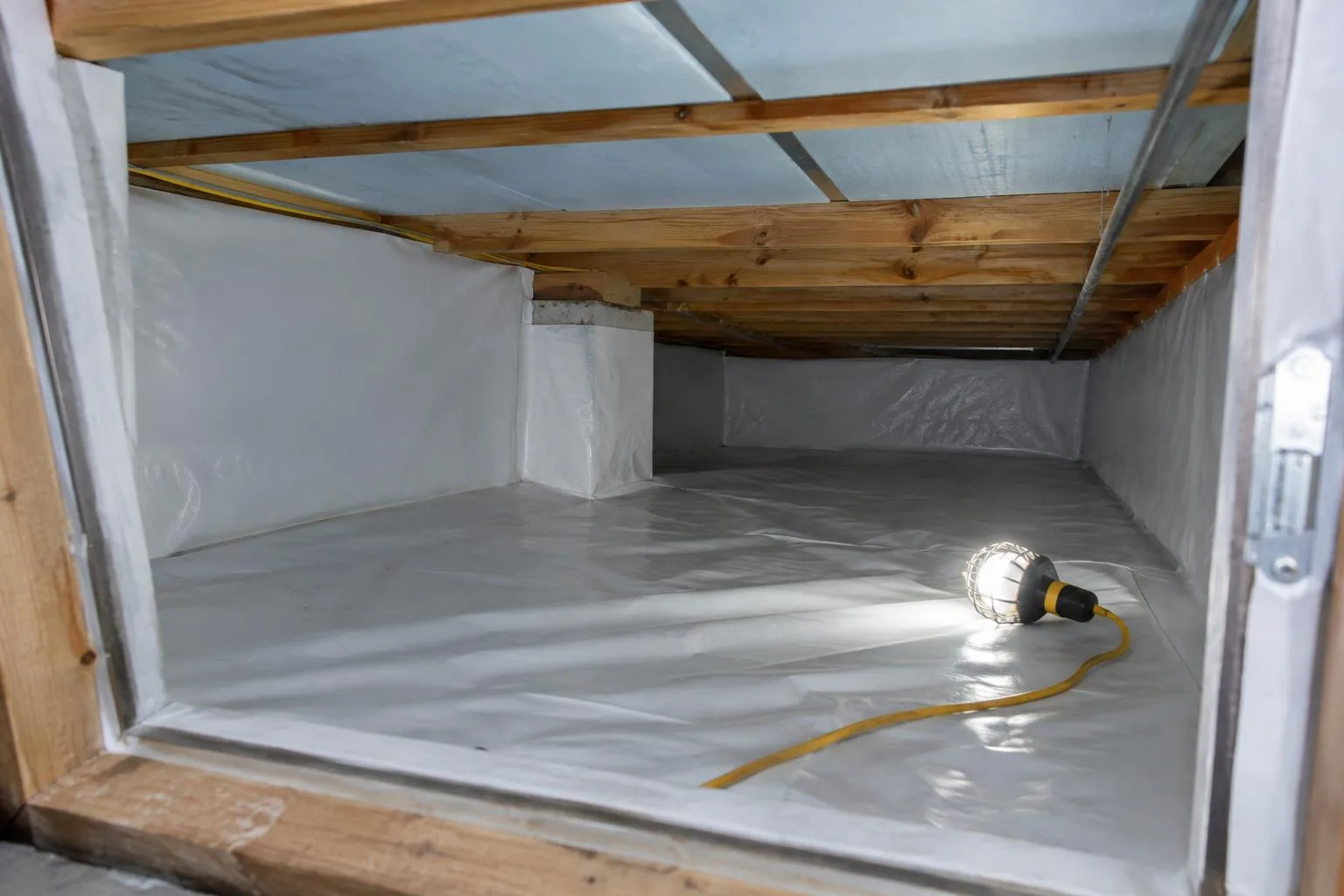
View through an access hatch into a crawl space lined in white vapor barrier with insulation panels

Crawl Space Encapsulation Services Asheville NC: Crawl Space Encapsulation Contractor and Seal Crawl Space

Dependable Crawl Space Encapsulation and Moisture Barrier Work in Asheville, NC and Buncombe County

  • Free quotes
  • Sealed and dried
  • Permit paperwork done

Asheville Crawl Space Encapsulation delivers crawl space encapsulation services in Asheville, NC to homeowners whose floors feel cold, whose air smells of damp earth or whose insulation has gone soft. As a crawl space encapsulation contractor we seal the ground and the walls with a crawl space moisture barrier, add drainage when water is present and finish with a dehumidifier. Plans seal crawl space moisture at its source, and ranch houses, cottages and stone-foundation homes get a plan built around what the camera shows.

Why homeowners choose us:

  • Free quotes after a look at the whole crawl space
  • Sealed and dried liner, drainage and dehumidifier planned together
  • Permit paperwork done North Carolina closed crawl space rules followed
  • Mold dealt with first growth treated before it gets covered

Our crews have worked under Asheville houses for 7 years, and the company is licensed and insured. Each quote separates liner, insulation, drainage, mold treatment and equipment, so you can see which pieces your house needs. When we find a water source or mold, the quote deals with that before any sealing. If the foundation looks like it needs attention, we describe what we saw.

Get a FREE Crawl Space Encapsulation Quote

No obligation. Free quote.

What Crawl Space Encapsulation Involves in Asheville, NC

Sealing a crawl space is a sequence of connected tasks, and the ones below make up a standard encapsulation in the Asheville area. Your quote shows which of them apply, since not every house needs all of them:

  • Cleanout removes debris, old plastic and soaked insulation so the new liner can sit flat on prepared ground.
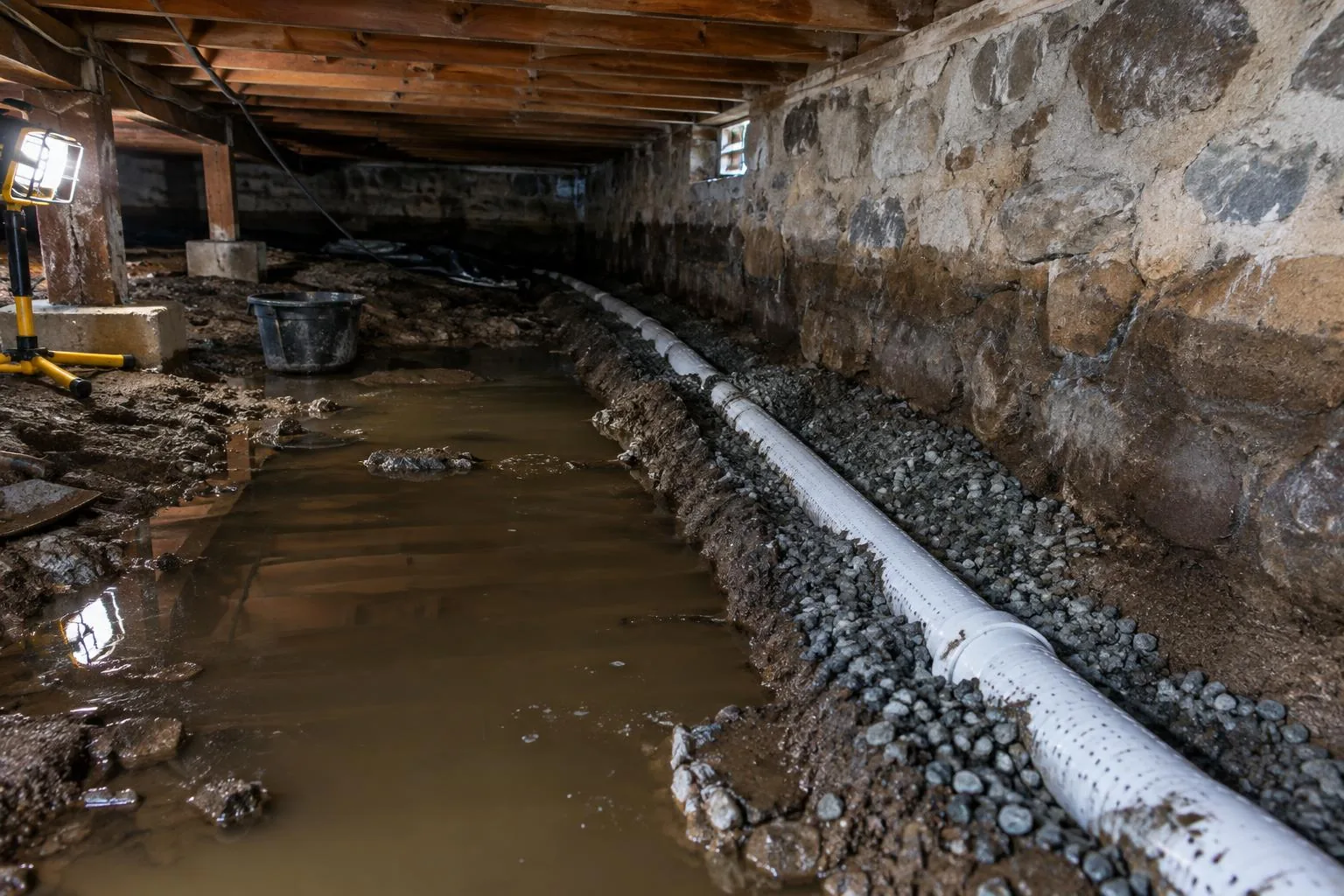
  • Water source fixes such as downspout extensions, grading changes and crawl space waterproofing keep liquid water from reaching the liner.
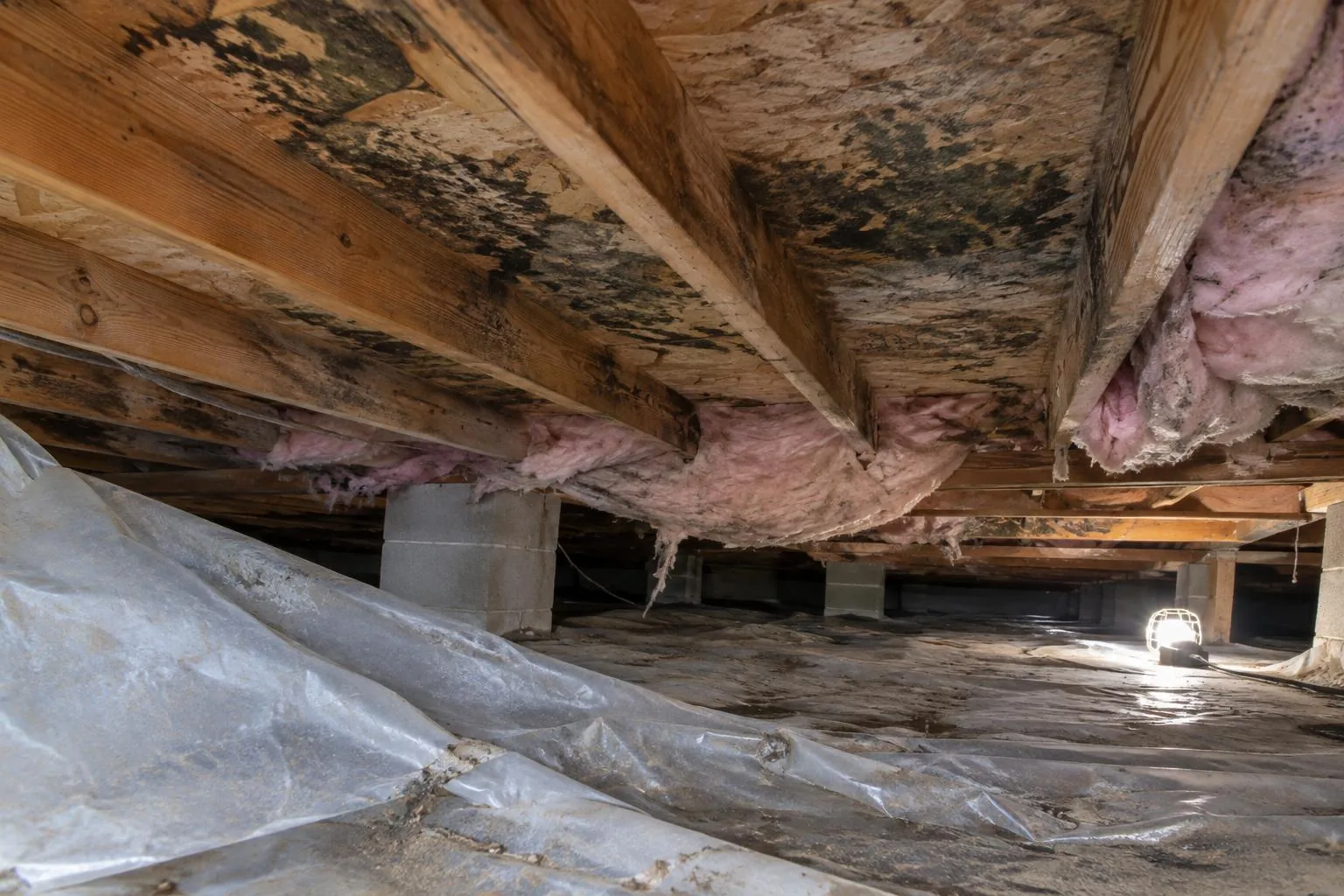
  • Mold cleaning treats framing before it is covered, and the full process is described on our mold removal page.
  • Ground liner is the crawl space vapor barrier installation step, a thick, reinforced sheet with overlapped, taped seams, which blocks vapor coming off the soil.
  • Wall liner and attachment continue the barrier up the foundation and fasten it near the top, so vapor cannot enter through masonry.
  • Vent closure lets us seal crawl space openings and stops outside air from carrying summer humidity into the space.
  • Wall insulation in rigid foam is crawl space insulation that helps floors above stay warmer in winter.
  • Drying equipment is a dehumidifier with a drain or pump, detailed on our dehumidifier installation page.
  • Pump and pit handle any water that still arrives, as explained on the sump pump installation page.
  • Permit filing documents the closed crawl space with the correct office.
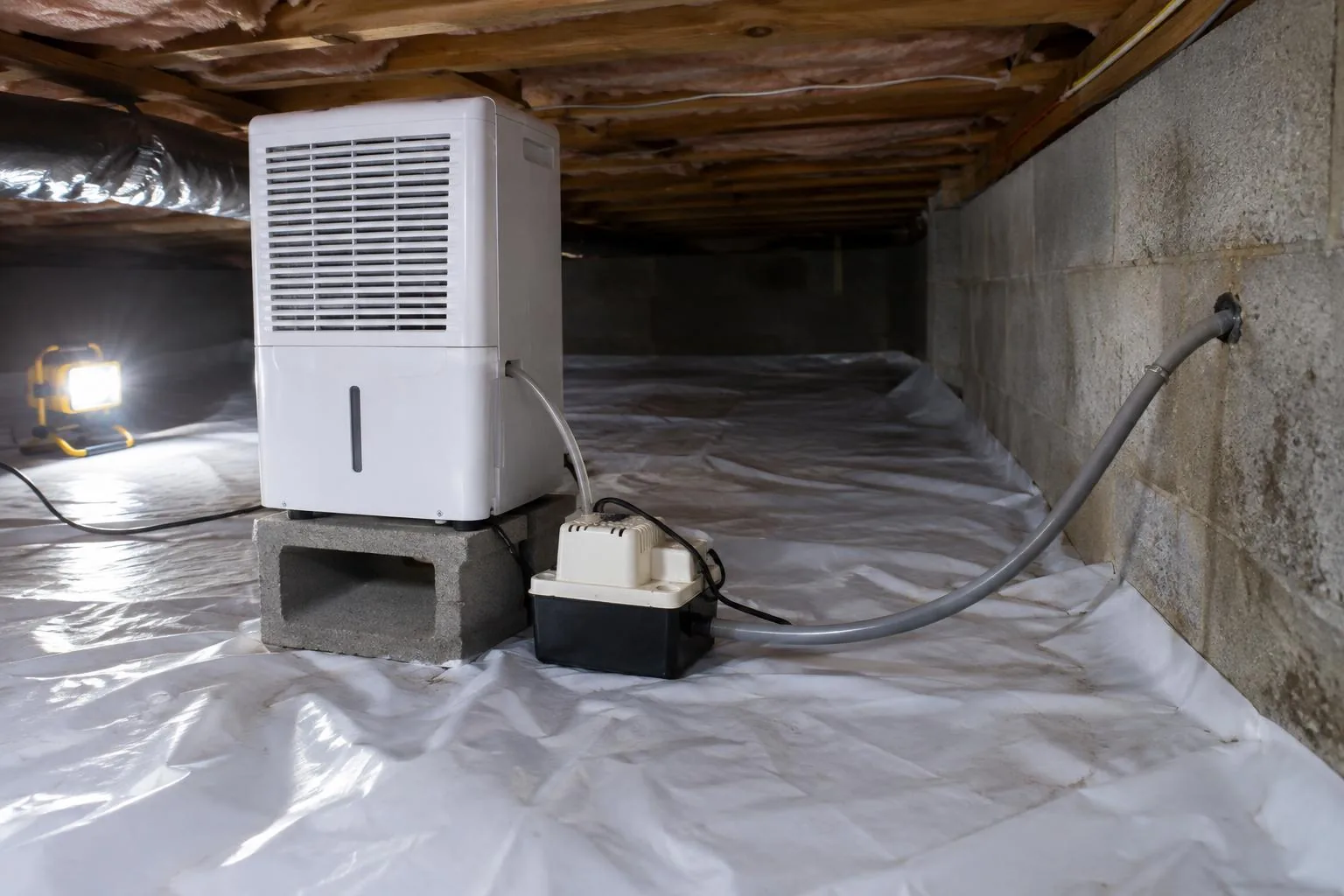
White dehumidifier on a concrete block with a condensate pump and hose in a lined crawl space

When You Need Crawl Space Encapsulation in Asheville

Few homeowners ask for a liner by name. The first clue is something wrong inside the house, and several common problems trace back to the space underneath.

Which Symptoms Come From the Crawl Space?

  • Mildew odor near floor vents often travels up from damp framing, and mold spreads further each humid season.
  • Floorboards that bounce or warp show the subfloor has been absorbing moisture, and rot is the next stage.
  • Soaked, drooping insulation no longer holds heat, and the water it holds keeps the joists wet.
  • Rodent or insect activity below the house tells you the space is damp and sheltered.
  • Air that feels heavy at home during summer comes up through gaps in the floor from the humid space below.

Why Crawl Space Encapsulation Is Harder in Asheville

Local weather, house age and state code shape every encapsulation here, so the same job in a drier region would be simpler. Four facts explain the difference, and each one changes a line on your quote.

Wet Ground and Humid Air Year-Round

Annual precipitation in Asheville totals 45.57 inches, and relative humidity sits near 75% at 1 p.m. Soil under a house stays damp, and warm air entering through vents condenses on cooler framing, which is why vents get closed and why the liner covers every square foot of soil, including the corners nobody wants to crawl into.

Heavier Rain Than Before

Totals are up 7.7 inches since 1970, and the most intense hourly rain has grown by 14%. Drains laid out for lighter storms overflow sooner, so water reaches crawl spaces that stayed dry for decades. The crew plans drainage whenever the camera shows ponding, rotted wood near the sill or tide marks on the walls from earlier floods.

Old Stone Walls

Many of the roughly six hundred Montford homes, built between 1890 and 1920, stand on heavy stone. Mortar joints let vapor and groundwater through, so the wall liner reaches the top of the wall and gets sealed there. Houses in other older neighborhoods get the same wall check, and the crew notes any wall that looks wet.

Permit and Drying Rules

A permit is required whenever a vented crawl space is converted into a closed one, whatever the project costs. The state code adds one drying method for each closed crawl space, which makes the dehumidifier part of the plan.

How Much Does Crawl Space Encapsulation Cost in Asheville, NC?

Encapsulation pricing in Asheville depends on scope. Sealing the floor and walls costs less than a full system. Drainage, mold treatment and equipment each appear on their own line, so you can compare the quote with other bids. The cost breakdown page explains what moves each figure.

JobTypical priceKey variables
Vapor barrier and sealing only$2,075 to $3,500Liner thickness, seam taping, vent closure
Full crawl space encapsulation$4,400 to $7,425Wall insulation, damage found, crawl space access
Dehumidifier installed$1,600 to $2,700Unit capacity, condensate route, power supply
Mold removal in the crawl space$1,000 to $1,700How far growth spread, insulation hauled off
Crawl space drainage system$4,000 to $6,750Pipe length, pit size, current drainage
Sump pump installed$1,125 to $1,900Pit size, backup battery, discharge pipe run

Our Crawl Space Encapsulation Process in Asheville, NC

Five stages carry the job from first call to final walk-through, and the third and fourth stages hold the on-site work.

1. Phone Call and Visit Booking

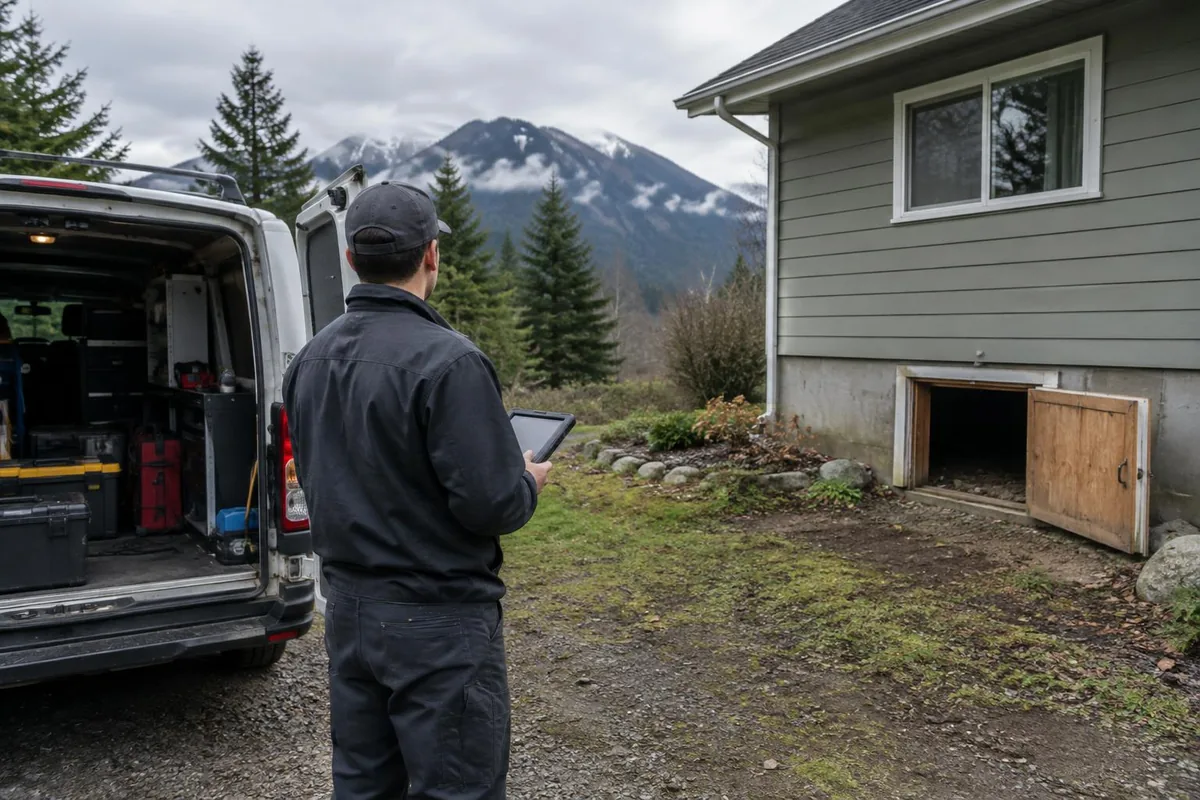
You tell us what you have noticed, such as a smell, wet floors or a humidity reading that stays high, and we book a time. A photo of the crawl space door helps us bring the right tools. The estimator confirms the parking spot and the route to the opening before arriving, so the visit starts without a search for the access panel or a hunt for a flashlight.

2. Camera Inspection and Free Quote

The estimator takes a camera under the house and looks at the soil, joists, vents, insulation and foundation walls. You leave with a free quote that lists each part of the work on its own line. If the foundation shows trouble, the estimator describes what was seen and what needs to be done, then tells you plainly which parts of that list our crew handles and which belong to another trade.

3. Water and Mold Taken Care Of First

Drainage, leaks and grading come first, then framing gets cleaned and treated for mold, and wet insulation leaves the house. Mold work adds roughly one day. Liner never goes over live growth, because plastic over mold keeps it warm and hidden, and it keeps spreading. The crew bags wet insulation and carries it out before the new materials come in.

4. Sealing and Drying Installation

The crew lays the ground liner, carries it up the walls, tapes seams, closes the vents and mounts the dehumidifier. Most full encapsulations take 1 to 3 days at your house. Extra drainage or a large space lengthens that, and the dehumidifier connection alone takes 2 to 5 hours. The crew checks every seam and the wall attachment before leaving each day.

5. Inspection and Walk-Through

We file the closed crawl space permit and schedule the inspection. After that you tour the finished space with the estimator, learn where the dehumidifier breaker is and get the permit records and the equipment paperwork in one folder. An encapsulated crawl space stays dry only while the unit stays powered, so we show you how to read its humidistat.

Crawl Space Encapsulation FAQs: Asheville, NC

What does crawl space encapsulation cost in Asheville?

A full encapsulation in Asheville usually falls between $4,400 and $7,425, and a vapor barrier with sealing alone runs $2,075 to $3,500. Wall insulation, damage found beneath the house and the ease of reaching the space change the final figure.

Is a vapor barrier the same as encapsulation?

A vapor barrier covers only the ground, while encapsulation also lines the walls, closes the vents and adds drying equipment. A liner by itself does nothing about water entering the space, so drainage is added when the camera shows it.

How many days does the work take?

A typical encapsulation takes 1 to 3 days at the house. Treating mold ahead of the liner adds about one day, and hooking up the dehumidifier takes 2 to 5 hours.

Is a permit needed for crawl space encapsulation in NC?

A permit is required in North Carolina to convert a vented crawl space to a closed one, at any cost. Addresses within Asheville go through the City Development Services permit center, and we file the application as part of the job.

Do I need a dehumidifier in a closed crawl space?

State code requires one drying method for a closed crawl space. A permanent dehumidifier with a drain or condensate pump is the usual choice, but ducted house air, an exhaust fan or a conditioned design also meet the code.

Should mold be treated before the liner goes down?

Mold is treated first and wet insulation comes out as well, because growth sealed under plastic keeps spreading. The water source is repaired in the same visit so the mold does not return.

How long does an encapsulated crawl space last?

A properly installed system that is maintained lasts 15 to 20 years or longer. Keep the dehumidifier plugged in and look over the seams and the pump once a year.

Asheville Crawl Space Encapsulation serves Asheville and Buncombe County.

Get a Free Crawl Space Encapsulation Quote in Asheville, NC

Mon–Fri 7am–6pm · Sat 8am–2pm

Call Now Free Quote